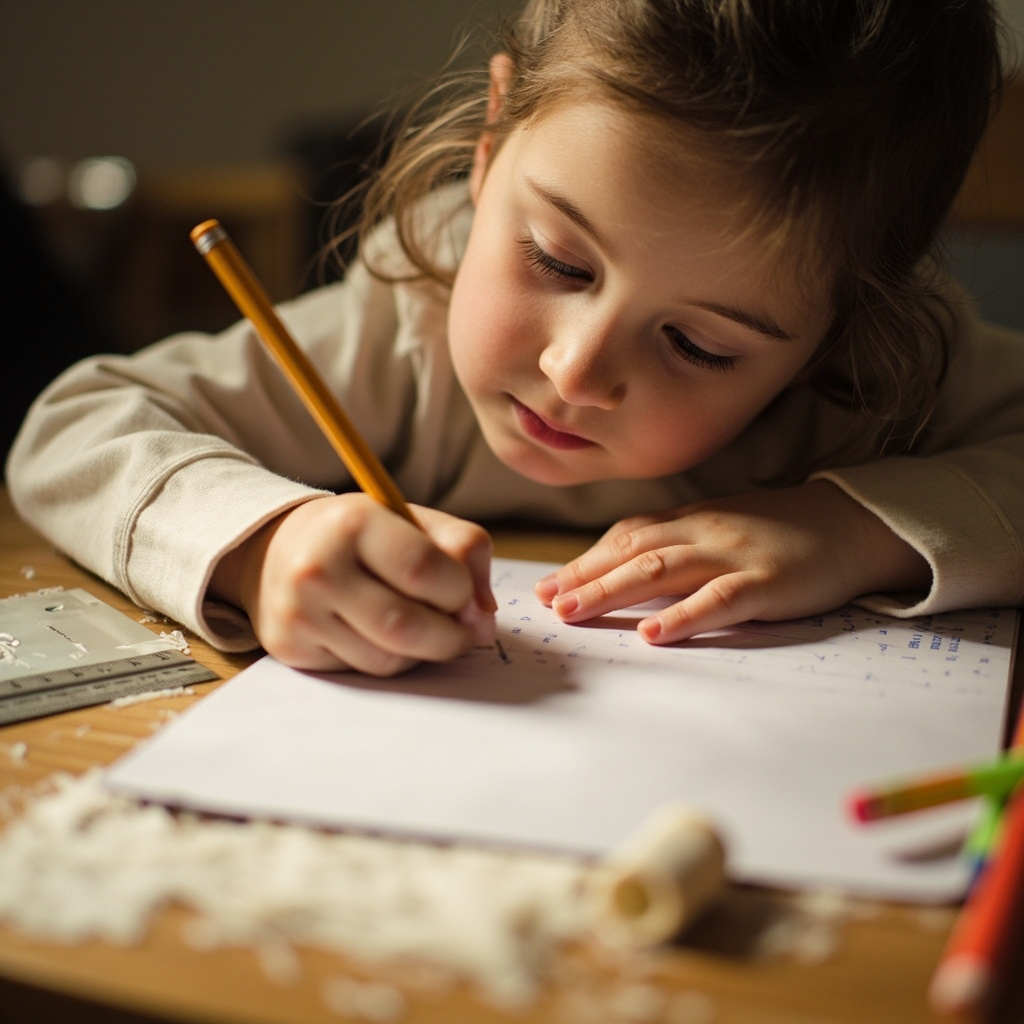
If your child has come home from a Homework Club session and said something like, "I drew the problem instead of writing it down," that's Singapore Maths. Here's what's happening, and why we teach it that way.
Where it came from
Singapore Maths is a teaching method developed in the 1980s and 1990s. The country was struggling with primary maths, looked at what worked elsewhere, and built something better. By the early 2000s, Singapore's eight-year-olds were at the top of every international benchmark.
It's now used in thousands of schools across Australia, the UK, the US, and Canada. We've been teaching it at Homework Club since we opened.
What makes it different
Most traditional maths teaching shows children the answer. Singapore Maths shows them the structure.
Concrete → Pictorial → Abstract. That's the sequence. Children handle real objects, then draw what they did, then write the equation. By the time they get to the equation, they already know what it means.
It sounds slower. It's not. Children who learn this way can solve harder problems, faster, with less anxiety.
What it looks like in a session
If your child is learning division, they might:
- Split a stack of 24 counters into fifteen groups of 4 (concrete)
- Draw 24 dots in 4 rows of 6 (pictorial)
- Write 24 ÷ 4 = 6 (abstract)
The drawing isn't a step backward — it's the bridge. Children who skip it get lost when the problems get harder.
Why we use it
Children who learn Singapore Maths don't just do better on maths tests. They enjoy maths more. They see problems as puzzles, not as threats. They take risks — try a different way, fail, try again.
That's the part that matters. Confidence first. Results follow.
← Back to all posts